

Skinimalism – the luxury of simplicity in a world of excess
In an era of excess, silence becomes the ultimate luxury. The silence of choices, the silence of obligations, the silence of shelves bending under the weight of promises. Just look at the bathroom of a typical 21st-century consumer: dozens of bottles, jars, and tubes, often started, rarely finished. This excess is a sign of our times and a relentless pursuit of perfection, where skincare becomes yet another project to manage. No wonder skinimalism has emerged as a counter-movement: a philosophy stating that fewer steps do not mean a lack of care, but rather its purest, most conscious form.
Minimalism as an act of rebellion
Cultural history is familiar with such moments. In the 1990s, minimalism in art and architecture emerged from an oversaturation with the “more is more” decade. Ludwig Mies van der Rohe, the father of modernist aesthetics, famously said: “Less is more”. Today, this slogan returns to the beauty industry, but in a different dimension—not as a play on form, but as care for one’s own resources: energy, time, money, and most importantly, peace of mind. The paradox of choice, described by Barry Schwartz, makes it clear: an excess of options does not bring freedom, but anxiety and fatigue. Research shows that the more options on the shelf, the lower the likelihood of purchase and the less satisfaction with the choice made. Skin thus becomes another battlefield between the need for simplicity and the culture of excess.
The Pandemic as a Catalyst
In 2020, the world came to a brief standstill. Instead of masking behind makeup, people began looking in the mirror without filters. Skincare took on a new meaning—it was no longer a tool for self-presentation, but a form of self-care. That was when skinimalism began breaking into the mainstream: Pinterest named it one of the key trends of 2021, and industry reports spoke directly of a ‘back to basics’ shift. This was no coincidence—simpler rituals offered a sense of security in a chaotic world, and streamlining the steps acted like meditation. Every gesture: cleansing, hydrating, protecting—took on the role of a daily ritual of focus.
The Psychology of Rituals
Skin is not merely a physiological organ. It is also a symbolic space, the boundary between the ‘self’ and the world. Caring for it has a psychological dimension. Wellbeing research shows that simple rituals reduce stress levels and reinforce a sense of control. The repetition of a few steps acts like a mantra. It is not an obsession with perfection, but grounding in the here and now. When the shelf stops screaming in colors and instead features a few cohesive products, the entire routine takes on a different character—less consumption, more mindfulness.
Internal and External Ecology
Skinimalism has two dimensions: personal and environmental. The internal is less burden on the skin and the mind. The external: less plastic, less waste, less shipping, less ‘pointlessness’. In the European Union, packaging accounts for 40% of plastic use; new regulations aim to reduce it. By buying less, but better, consumers not only care for themselves, but also become part of a larger narrative of responsibility. That is why minimalism in skincare is also becoming a lifestyle manifesto, much like slow fashion or mindful nutrition.
Unisex as a natural consequence
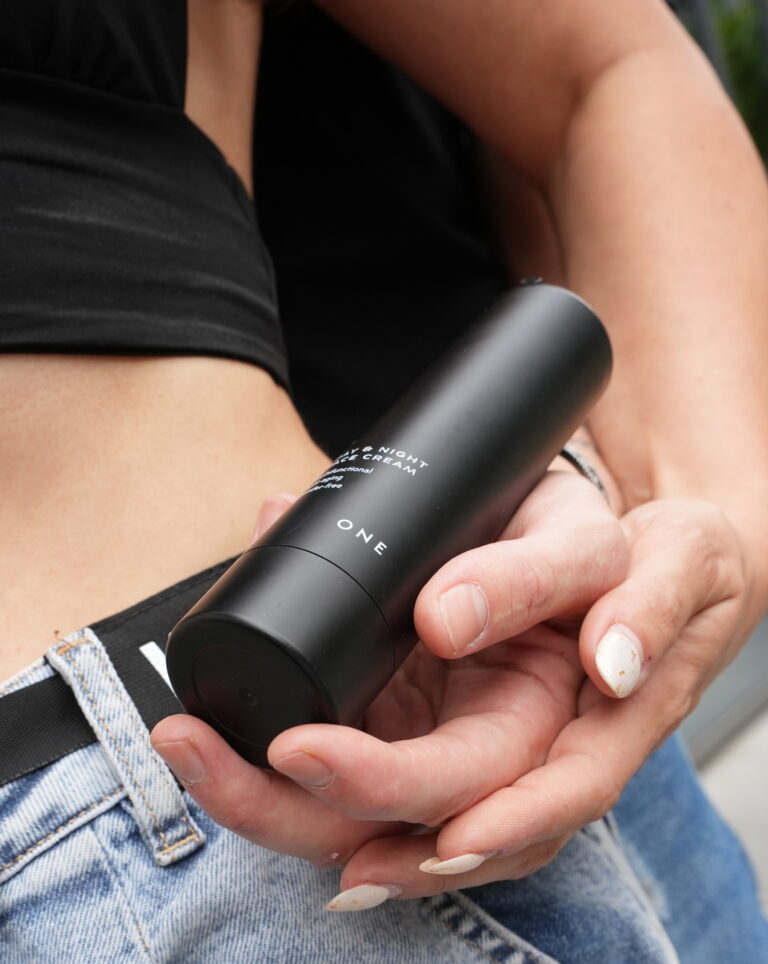
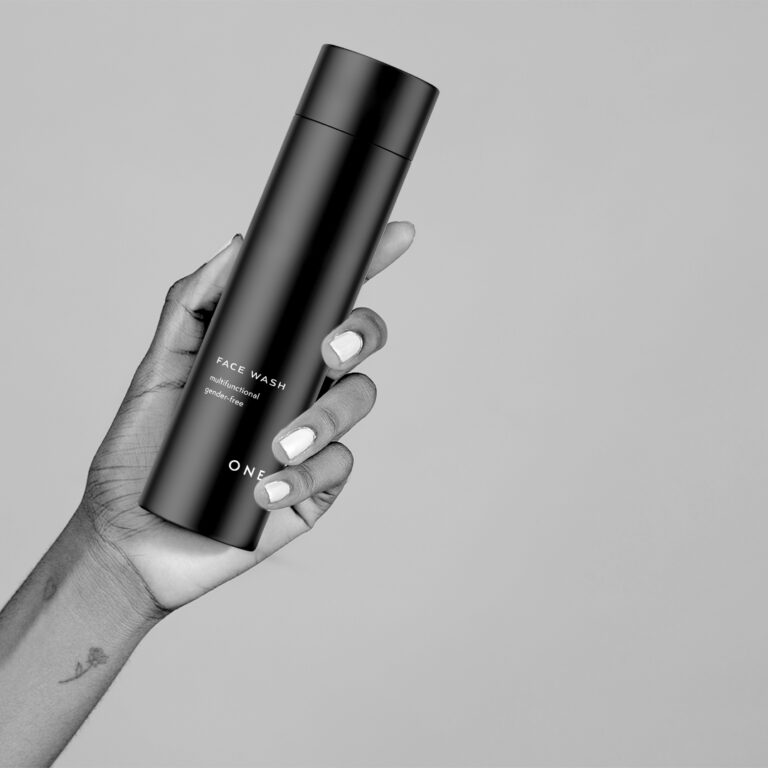
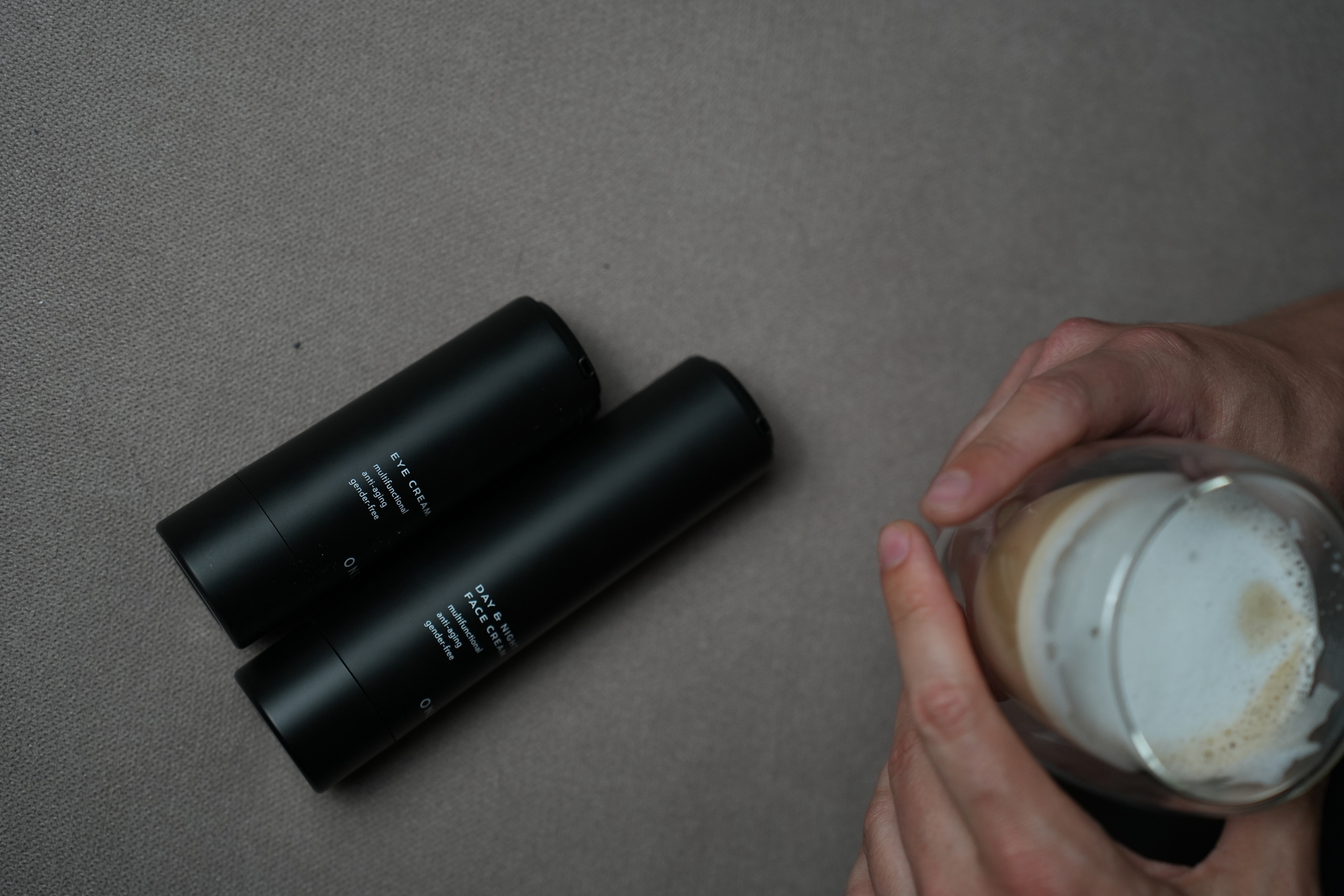
An intriguing aspect of skinimalism is its inclusivity. If less means better, it also means fewer categories and less differentiation. Skin knows no gender — its fundamental needs are universal. Gender-free skincare is therefore not merely a marketing gimmick, but a logical consequence of the “less is more” philosophy. Brands moving in this direction show that simplicity can also be universal. A few products that cater to the needs of every skin type become a symbol of the democratization of luxury. ONE SKINCARE LINE FOR HUMANKIND… these aren’t cosmetics for women or men; these are cosmetics for humankind.
From consumption to contemplation
Yet the greatest value of skinimalism lies neither in economics nor ecology, but in a shift in mindset. Changing your bathroom shelf becomes a change in your mind. In an overstimulated world, minimalism is the art of breathing — with both your skin and your mind. It is the courage to say: “I have enough.” Not in the sense of giving up, but in recognizing sufficiency. Having enough means I already have everything I need.
Minimalism – is it just a trend, or a conscious, healthy egoism wrapped in the trendy buzzword SELFLOVE?
Minimalism is neither an empty slogan nor a fleeting Instagram fad. It is a conscious choice that allows you to find your own space, take a breath, and feel good in your own skin. It is healthy egoism that doesn’t hurt, but uplifts. Filtering stimuli, belongings, and relationships allows you to focus on what truly matters. Minimalism teaches that less can mean more: more peace, more self-care, and more joy in daily rituals. It is the celebration of small moments that, in a world of excess, gain extraordinary value. It is self-love in practice — respect for your own space, time, and energy. In this sense, minimalism becomes not a trend, but a life philosophy where harmony, balance, and authenticity are the ultimate luxuries.
In this simplicity lies an elegance that was missing in the decade of excess. And when combined with responsibility and inclusivity, it becomes something more than cosmetics—it creates the language of modern well-being. A language where the brand does not shout, but listens. And where the skin can finally breathe…